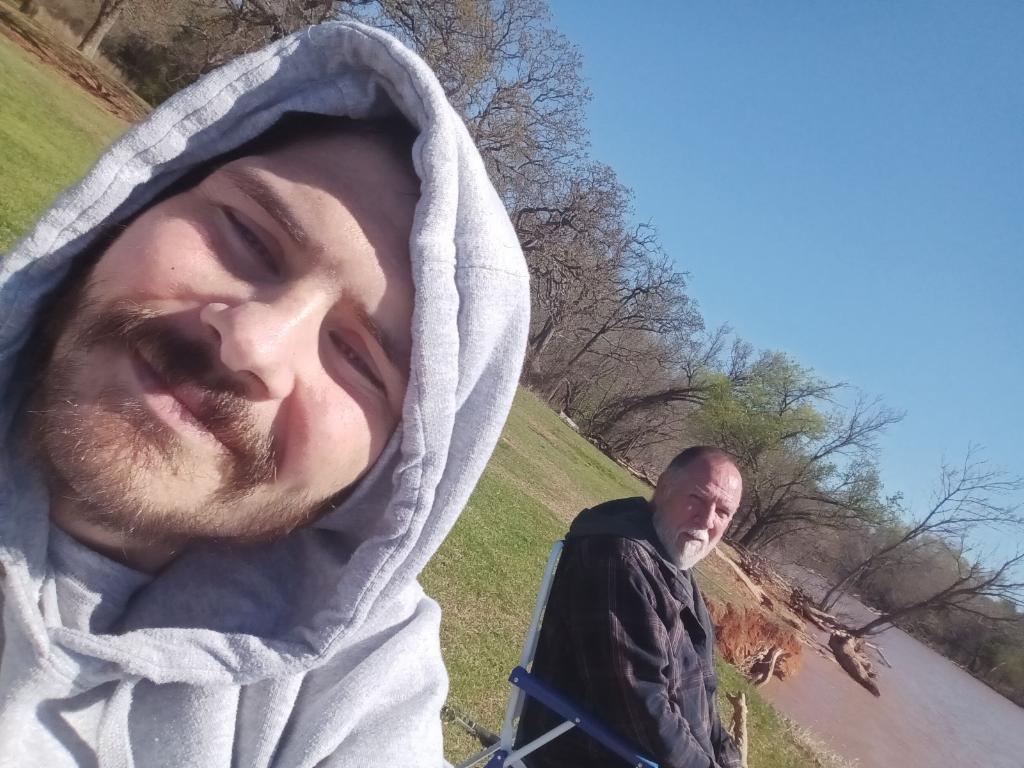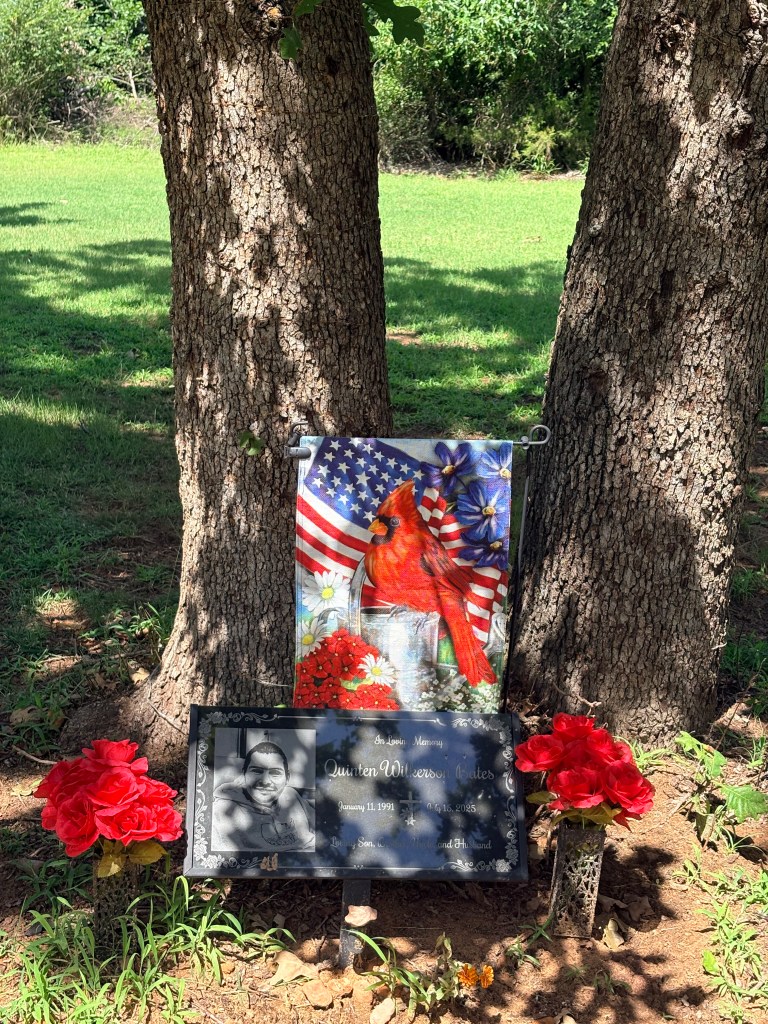
• There are moments when the house feels too still, when even the hum of the refrigerator or the rustle of wind outside feels loud against the quiet. It’s in those moments that I remember Quinten’s laughter most clearly.

    His laugh was never the kind that demanded attention. It wasn’t loud or showy. It was warm, low, and genuine, like the sound of contentment itself. It had a way of filling a room without overwhelming it, of making everyone nearby feel at ease. When Quinten laughed, you couldn’t help but smile. It reminded you that life, even with all its sharp edges, still held soft places to land.

    I think about how his laughter showed up at unexpected times, after a long day, in the middle of a small mistake, or when things didn’t go quite right. He had this gift for finding humor in imperfection, for easing tension just by being himself.

    These days, I hear echoes of that laughter in small moments: when the dogs chase each other in the yard, when a story reminds us of something silly he once said, or when we catch ourselves smiling at something we know he would have found funny.

    It’s not the same, of course. Nothing could ever be. But those quiet ripples of laughter still move through this place, gentle reminders that joy doesn’t disappear when someone leaves. It lingers, tucked into the walls, the routines, and the hearts of those who loved him.

    And maybe that’s the gift he left us, the ability to find light even in loss, and to remember that laughter, once shared, never really fades away.

  • Grief has many shapes, anger, sorrow, memory, longing, but one of its heaviest forms is loneliness. Not the kind cured by company or conversation, but a loneliness that settles into the places where your loved one used to be. A loneliness that follows you into every room. One that lingers even when you’re surrounded by people who care.

    Losing Quinten has brought a silence into my life that I never expected. A silence that isn’t just the absence of sound, but the absence of him, his voice, his footsteps, his laughter, his hugs. The quiet where his presence used to live is sometimes the loudest thing in the room.

    And the loneliness cuts even deeper because for two years, James and I took care of Quinten every single day.
    We weren’t just his parents; we became his full-time caregivers.
    His advocates.
    His comfort.
    His constant.

    Every morning, every night, every appointment, every surgery, every medication, every hope, every setback, we were there. Our lives revolved around keeping him going, keeping him safe, keeping him loved. Caring for him became part of the rhythm of our days, the structure of our home, the beat our hearts moved to.

    To go from that level of closeness, that level of purpose, that level of commitment… to nothing is a loneliness unlike anything I’ve ever known.

    People can sit beside you.
    They can listen, they can comfort, they can hug you.
    And I am grateful for every single one of them.

    But none of them can fill the space Quinten left.
    None of them can step into the shape of the relationship that only he and I had, the kind that comes from raising a child and then walking beside him as he leaves this world.

    Grief is lonely because it is personal.
    Everyone loved Quinten in their own way, but no one loved him the way I did as his mother.
    And no one walked those final years the way James and I did, shoulder to shoulder with him, carrying the weight, the fear, the hope, and the heartbreak.

    The loneliness of grief shows up in unexpected moments when the day grows quiet, when the chores are done, when the sun goes down, and the house settles, when I reach for my phone to tell him something small or silly, and then remember I can’t.

    It’s in the empty couch, the unmade plans, the Saturdays, the meals, the caregiving routines that no longer have a purpose. The medications that don’t need setting up. The appointments that don’t need scheduling.
    The tasks that used to fill my hands now leave them empty.

    Some days I feel surrounded by love from my family, my grandbabies, my friends, and still, there is a part of me that is alone, because the person I cared for with my whole heart is no longer here to care for.

    That is the quiet loneliness no one warns you about, the loss of a role that I gave everything to.

    Yet even in that loneliness, there is something tender, too. Because the ache is born from love, 
    the kind of love that cares, protects, sacrifices, and never once regrets it.

    The same love that made me his mother.
    The same love that held him through life.
    The same love that held him as he left this world.

    A mother’s grief is a room inside you, a room that stays. Some days, the door is wide open, and the ache floods in. Other days, it is softer, quieter, a place where memory sits gently beside you.

    I don’t expect the loneliness to disappear.
    But I do hope it will soften.
    That someday it will feel less like emptiness and more like a quiet space where I can sit with him in memory, feeling not only what I’ve lost, but what I was blessed to love so fiercely.

    Grief can be lonely.
    But his love is still here.
    And even in the silence he left behind,
    I am never truly alone.

  • There are days when the softness of memory isn’t enough. Days when gratitude and peace and acceptance all feel like strangers. Days when the only thing sitting in my chest is anger, heavy, hot, relentless.

    I don’t talk about this part often, but it’s real.

    I’m angry.

    I am so incredibly, deeply angry.

    I’m mad that Quinten is no longer here.

    Mad that I can’t see his smile or hear his voice.

    Mad that I can’t wrap my arms around him in one of his tight, comforting hugs.

    Mad that his spot on the couch is empty, his cabin is dark and quiet, his laughter is missing from everywhere and every holiday.

    I’m angry at the finality of it all.

    Death does not negotiate.

    It does not compromise or soften its edges.

    It just… ends things.

    And Quinten was only 34.

    Thirty-four years old.

    So young.

    Too young.

    Why did he have to get cancer?

    Why did it have to be incurable?

    Why did it have to take him from us when he still had so much life left to live?

    There are no answers that feel good enough.

    There are no explanations that ease the ache.

    Not for a mother who buried her child.

    And losing a child… it goes against everything in your heart and soul.

    From the very moment they are born, something inside a mother shifts forever.

    You become responsible for their safety, their well-being, and their comfort.

    You promise, silently, instinctively, that you will protect them with your life.

    That you will stand between them and anything that could cause harm.

    So when cancer comes, when illness steals control, when your child begins slipping away, no matter how tightly you hold onto them… it shatters something sacred.

    And the anger comes from that fracture.

    It comes from the feeling that you failed at the most primal job a mother has ever been given.

    What’s worse, in those last moments when Quinten’s breathing changed, when the death rattle filled the room with a sound no parent should ever have to hear, I found myself begging the Lord to take him. Begging for mercy. Begging for peace.

    And that goes against everything you’re taught as a parent.

    Everything you swear to uphold.

    Everything you believe that makes you a good mother.

    A mother is supposed to fight to keep her child alive.

    Not pray for their suffering to end.

    Not plead for their release.

    But when your child is dying in front of you, love becomes something different.

    It becomes a surrender.

    It becomes a sacrifice.

    It becomes the hardest kind of mercy a parent can ever give.

    And still… the anger remains.

    Because none of it feels fair.

    None of it feels right.

    None of it feels like the way things are supposed to be.

    I’m angry that he hasn’t come to me in my dreams yet.

    I wait every night, hoping, longing, for even the faintest glimpse of him. A sign. A visit. Something.

    But the nights are quiet, and that silence hurts more than I ever imagined it could.

    I’m angry that my youngest child is gone.

    Those words still don’t feel real, even when I say them.

    Even when I write them.

    Even when I live inside their truth every single day.

    And yes, I know I was lucky, blessed, even to be with him when he took his first breath and his last.

    I know how many parents never get that gift.

    But the gratitude does not erase the grief.

    And it certainly does not erase the anger.

    Because anger is part of love, too.

    It rises up when something precious is ripped away.

    It fills the space where a future used to be.

    It grows out of all the “should-have-beens” and “what-could-have-beens” and the dreams that were never given a chance to bloom.

    I’m not ashamed of my anger.

    I’m not afraid of it.

    It is simply proof of how deeply I love my son.

    Someday, the sharp edges of it may soften.

    But for now, I let it be what it is,

    a natural, honest part of my grief,

    a place where my love has nowhere else to go.

    And even in my anger, I know this:

    Love is still stronger.

    Love is still louder.

    Love is still here, carrying me through the moments when nothing makes sense.

    But some days,

    I’m angry.

    And that’s okay.

  • There are moments in life when love is so real, so present, that it brings tears you don’t even try to hold back. For Quinten, his sister’s wedding was one of those moments.

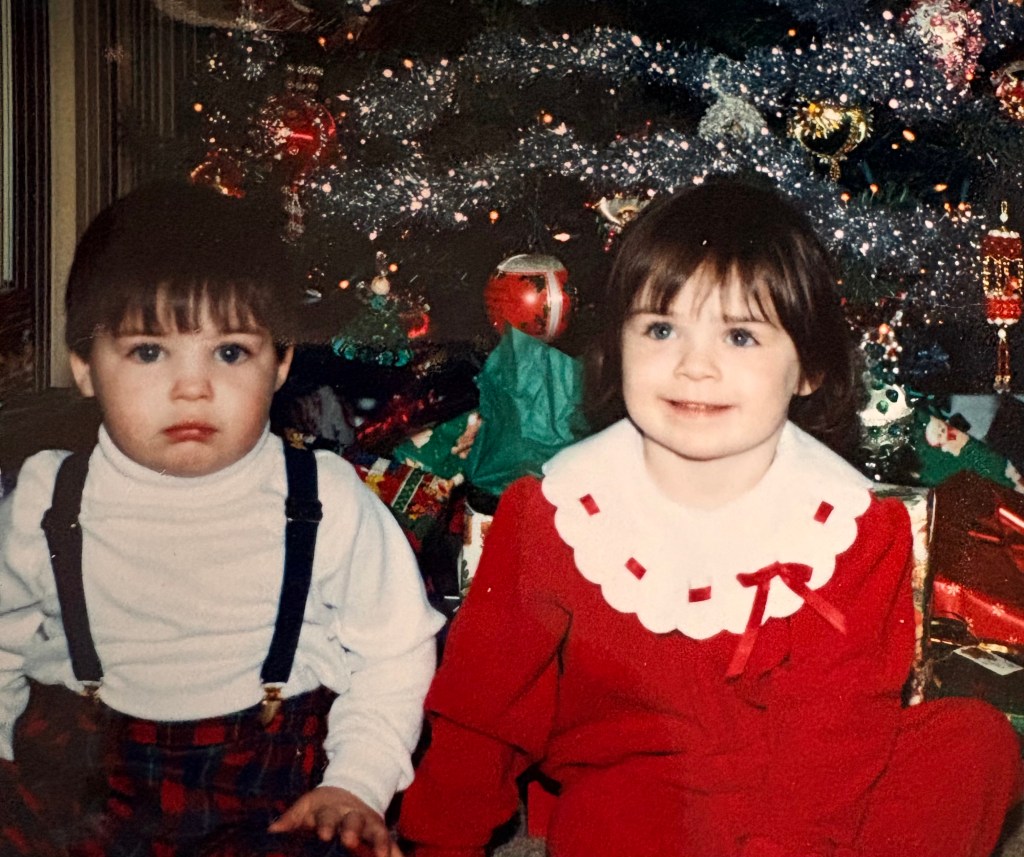
    They had been close since the very beginning, only eleven months apart, growing up more like twins than siblings. They shared everything: secrets, laughter, mischief, and the kind of unspoken understanding that only comes from a lifetime spent side by side. Through every season of their lives, they were constants in each other’s world.

    On her wedding day, as she stood before him in her dress, the emotion caught up to him. Quinten cried, not from sadness, but from the purest kind of joy. It was pride, love, and memory all rolled into one. The years of shared childhoods, inside jokes, and late-night talks seemed to gather in that one moment.

    In the photo, she leans toward him, comforting his tears of happiness, just as he had comforted her so many times before. There’s something sacred in that exchange, a reflection of the bond they shared, the love that never needed words to be understood.

    That day, his tears spoke what his heart already knew: that love like theirs is a gift. It endures through every change, every challenge, every goodbye.

    And now, when she looks at that photo, she can still feel the warmth in his eyes and the shared joy that filled that moment. His tears weren’t just for her; they were a reflection of everything beautiful between them, everything that still lives on in memory and love.

    Because even now, though he’s gone from sight, the bond they shared remains unbroken. Love like that doesn’t fade; it just finds new ways to stay close.

  • Two days before Quinten died, he asked James for something very specific.

    Quinten told James to write him a letter, a letter about his feelings toward Quinten. Quinten wanted James to read it to him and then place it in his casket when he was gone.

    It was such a simple request.
    And such a profound one.

    If you’ve read the post about the day Quinten said his goodbyes, you know how those final hours unfolded. There was no slowing down. No quiet pause. We weren’t sitting at tables writing letters; we were sitting beside him, holding space, soaking up every second we were given.

    We weren’t going to miss a single moment with Quinten.

    The idea of letters stayed with us, though. It moved quietly through the room, from one heart to another. We talked about it as a family. We felt it. We understood exactly why he asked.

    But none of us knew we only had two more days.

    And then, just like that, we ran out of time.

    There were no letters written before he died. Not because the love wasn’t there, but because the love was everywhere else, in conversations, in presence, in hands being held, in voices saying what mattered most.

    At Quinten’s funeral, we did the only thing we could think to do. We encouraged everyone to bring a letter to him, words they wished they could have said, or wanted to say one more time, and place them in his casket to be buried with him.

    It felt right.
    It felt like honoring his request in the only way we had left.

    We gathered at Quinten’s casket with folded pages, envelopes, and quiet tears. And then there was Lincoln, Quinten’s seven-year-old nephew. He didn’t have a letter. Instead, he brought a friendship bracelet. With careful hands, we placed it in Quinten’s shirt pocket as Lincoln requested.

    In that moment, I understood something deeply.

    Even when we don’t have words, we still find a way to give love something tangible to hold.

    And still, something lingered with me.

    Quinten wanted letters because he understood the power of words. He knew that sometimes love needs somewhere to land. Somewhere tangible. Somewhere lasting.

    So this year, I am carrying his request forward.

    In honor of Quinten’s dying wish, I am writing a letter from my heart to each member of our family on their birthday. Not letters of obligation, but letters of truth. Letters that say what matters now. Letters that don’t wait for the “right time.”

    Because loss teaches you something very clearly: time is not promised, and words left unspoken don’t get easier to carry.

    These letters are my way of keeping Quinten’s request alive, of letting his wisdom continue to shape how we love, how we show up, and how we speak to one another.

    We didn’t get to write the letters he asked for in time.

    But I am writing now.

    And in doing so, we are learning that even when time runs out, love still finds a way to be spoken, carried forward, letter by letter.

  • A mother’s grief is something the world can’t quite explain. It doesn’t follow rules. It doesn’t fade on a schedule. It doesn’t behave the way people think it should.

    It is raw.
    It is relentless.
    It is stitched into the deepest part of your heart because that is where your child has lived since the moment they took their very first breath.

    When Quinten died, a part of me went with him.
    Not because I wanted to leave this world,
    but because he was woven into every part of who I am.
    He was my youngest child, my only boy, my Momma’s boy, even at 34. And losing him has felt like losing gravity, like the ground beneath me shifted and hasn’t settled back into place.

    A mother’s grief is different because it begins at birth.
    From the moment you hold your child in your arms, you make an unspoken promise:
    I will protect you.
    I will care for you.
    I will keep you safe.

    And when life hands you something you cannot protect them from, something as cruel and merciless as cancer, that promise cracks in ways that feel unbearable.

    A mother’s grief holds love and guilt and anger and longing all tangled together.
    It wakes with you.
    It follows you from room to room.
    It lies down beside you at night.

    People may see me smile, cook, talk, hold my grandbabies, and continue living, and all of those things are real.
    But underneath, the grief is still there, quiet and steady, like a pulse I didn’t ask for.

    A mother’s grief is hearing a song and feeling your chest collapse.
    It’s seeing a photo and losing your breath for a moment.
    It’s reaching for your phone to text him before remembering you can’t.
    It’s waking up from sleep and feeling that half-second of normalcy before reality hits all over again.

    It is the ache of the arms that can no longer hold your child.
    The longing to hear “I love you, Momma” just one more time.
    The wish, the impossible wish, for even a minute more.

    People say time heals all wounds.
    But a mother’s grief isn’t a wound.
    It’s a new place inside you, a sacred, painful room where love and loss sit side by side.

    Some days, the door to that room is wide open, and the grief floods in without mercy.
    Other days, it stays cracked just enough to remind you that it’s still there, softened, but never gone.

    And yet, amid the ache, there is this truth:
    A mother’s grief is proof.
    Proof that your child lived.
    Proof that they mattered.
    Proof that the bond between you cannot be undone by death.

    Grief is the price of love, and my love for Quinten is endless.

    I will carry this grief because it is the last thing he left in my hands.
    And I will carry it with honor, because it means he was real, he was mine, and he changed my life in ways that will echo for the rest of my days.

    A mother’s grief doesn’t end.
    But neither does a mother’s love.
    And somehow, in ways I am still learning, those two truths walk together, one teaching me to endure, the other teaching me to live.

  • Life has a way of weaving joy and sorrow together in the same breath. While we walked through some of the hardest moments with Quinten’s cancer journey, God gave us a beautiful reminder that miracles still bloom even in the shadow of sadness.

    As Quinten began palliative chemotherapy, treatments designed to slow the cancer’s growth and give us more precious time together, we received the most unexpected gift. On my birthday, our daughter Whitney and her husband Jared surprised us with the wonderful news: they were expecting a baby in August 2025!

    What a joy to celebrate. Finally, some good news to hold onto. A baby shower to plan, memories to anticipate, and the promise of new life that brings so much hope.

    Quinten was overjoyed at the thought of another little one in the family. He has always taken his role as “the cool uncle” to heart, whether that’s spoiling Lincoln, our 7-year-old grandson, or making sure every holiday feels special. Since moving to the farm, Quinten has insisted on fireworks for the Fourth of July and New Year’s. He never missed a birthday dinner, always here with a gift in hand. Even while fighting cancer, his heart was always fixed on bringing joy to others.

    That’s what inspires me most. Quinten’s story is not just about struggle; it’s about love, generosity, and choosing to create joy even when life is hard. This new little life is yet another reminder that beauty can shine in unexpected places. It’s proof that even when sadness surrounds us, miracles are still unfolding.

    Sometimes, the light we’re searching for comes right in the middle of the storm.

  • When you lose a child, your world changes forever. But when you’ve had the gift of walking beside that child through the hardest days of their life, something else changes, your heart.

    Quinten’s battle with cancer was cruel and unrelenting, yet he met every moment with courage, humor, and grace. I watched my son fight with quiet strength, never letting bitterness take root. Even when the pain was deep, he still found ways to love, to comfort others, to smile, to say thank you. And through it all, he kept teaching me what it truly means to live with heart.

    He made me see the world differently. Little things that once seemed important began to fade, and what remained was love,  pure, patient, unconditional love. I learned that time spent together, even in silence, is a sacred gift. That kindness matters more than words. That presence can be its own form of healing.

    Quinten showed me how to be brave, not just for him, but for myself. He taught me that strength isn’t about holding everything together, it’s about showing up with love even when everything feels like it’s falling apart.

    Through his illness, I learned to slow down, to notice, to listen. I became softer, more compassionate, more aware of how fragile and precious life is. And when the day came that I had to let him go, I realized that even in his leaving, he was still shaping me, still helping me become the person I was meant to be.

    He made me a better mother. A better wife. A better friend. A better human being.

    Because of Quinten, I know that love doesn’t end. It transforms. It becomes part of who we are, the way we speak, the way we love, the way we choose to see light even in the darkest places.

    So yes, cancer changed our lives. But Quinten changed me.

    His courage, his laughter, his kindness, those are the lessons he left behind. And every day, I try to live in a way that honors them.

    That honors him.

    If love can teach us anything, it’s that even in loss, we can still become more.

  • When people talk about caregiving, they often picture tasks: medications, meals, appointments, helping someone stand, helping someone breathe, helping someone make it through another day. And yes, caregiving is all of that.

    But caring for Quinten for those two years was something deeper.
    Something life-altering.
    Something that didn’t just fill my days, it rewrote who I am.

    Those years changed me in ways I’m still trying to understand.

    For two years, my entire world revolved around my son’s needs.
    Every morning began with checking on him.
    Every night ended with wondering how he would be by morning.
    Every decision, every plan, every ounce of energy flowed into keeping him comfortable, supported, and loved.

    My life became smaller and bigger at the same time.
    Smaller, because there was no space for anything but caregiving.
    Bigger, because love stretched me into places I didn’t know I could go.

    Caregiving changed me physically; exhaustion carved itself into my bones.
    It changed me emotionally; grief began long before he took his last breath.
    It changed me spiritually in ways I’m still unraveling.

    I learned to be strong in moments when I wanted to collapse.
    I learned to be patient when fear clawed at my heart and mind.
    I learned to stay steady even as my own world was cracking.

    Caregiving reshaped my definition of love.
    It became something quieter, humbler, deeper.
    It became showing up on the worst days.
    It became holding his hand through pain.
    It became about celebrating tiny victories and enduring devastating losses.
    It became doing whatever needed to be done, even when it broke me.

    I learned what it truly means to advocate fiercely.
    To speak for him.
    To fight for him.
    To comfort him when no comfort felt big enough.

    I learned what it means to surrender, to accept that I could not save him, even though every part of me wanted to try.

    Those two years taught me that love is not only laughter and joy, it is also sacrifice, worry, sleepless nights, holding your breath, and choosing to do it all again the next day.

    Caregiving also changed the way I see time.
    I learned to treasure the ordinary, a conversation, a small smile, a moment of clarity, the way he would say, “I love you, Momma.”

    When caregiving ended, when my purpose shifted in an instant, I felt hollow. Lost. Untethered.
    Because the role that had consumed my days, the role I poured my entire heart into, was suddenly gone.

    People tell you caregiving ends when the person dies.
    But that’s not true.
    The caregiving lives on in your muscle memory, in your routines, in the ache of your empty hands, in the way your body still anticipates his needs.

    Caregiving changed me forever, not just because of what it demanded, but because of what it gave me:

    Time with my son that I will cherish until the day I die.
    Moments of intimacy, honesty, and closeness that most parents never get.
    The honor of walking him all the way home.

    I would do it again, every moment, even knowing how it ended.
    Because caregiving was the final chapter of my motherhood with him.
    And it shaped me into someone braver, softer, wiser, and more deeply human than I was before.

    Caregiving was hard.
    It was heartbreaking.
    It was sacred.
    And it changed me forever.

  • Saturdays had always been our day. The sirens would sound at noon, and right on cue, Quinten and Lenny would walk across the driveway from his cabin to our front door. It was a small tradition, comforting and familiar.

    But on Saturday, July 12th, 2025, the moment I saw Quinten’s face, I knew something was different. Something was wrong.

    He stood in the doorway, tired and hurting, and said quietly,
    “I can’t walk over again. It’s time for the hospital bed, Momma.”

    We had talked about this moment before, the moment he would ask. He told me that when it was truly the end, he would tell me, and I would know. And I did. His cabin was only a short walk from our home, but that morning it had become too far.

    I got him settled on the couch and called hospice. The bed would be delivered that day.

    And still, because it was Saturday, we carried on with family dinner, even though every breath felt heavier. Kevin and Terra arrived with little Lincoln. James took Kevin outside to burn boxes in the burn barrel, his way of bracing himself for what was coming.

    Quinten noticed James wasn’t inside. He wanted to see him. He tried to stand up to go out to the porch, but the moment he rose, he collapsed to the floor in pain. I screamed for James, and somehow, with strength we didn’t know we had, he and I got Quinten back onto the couch.

    I checked him for injuries. Nothing appeared broken. But the fall, the shaking hands, the confusion in his eyes… deep down, I knew. The cancer had likely reached his brain.

    A little later, Quinten asked again to sit on the porch. He wanted to watch James and Kevin burn boxes. With Terra holding the door and me steadying him, we got him to James’s chair outside. His hands trembled harder than ever.

    He looked at Terra and said the words he had never said out loud before:
    “I’m dying.”
    And she said softly, “I know, Quinten… and I’m sorry.”

    He grew tired, so we helped him to our bedroom so he could rest in our bed. I asked whether he wanted me to call his sister. Whitney hadn’t planned to come that day; she was very pregnant, swollen, and tired. But Quinten said yes. When I reached for my phone, he picked up his own instead. With his shaking hands and a little help from me, he called her.

    “Whit… I fell down… and I’m dying. Can you come see me?”

    She cried. She asked if it was time. I told her yes.
    She and Jared rushed over.

    Inside, we kept cooking dinner: James’s BBQ ribs, baked beans, and my potato salad. I was baking chocolate chip cookies for dessert, Quinten’s favorite.

    Whitney arrived and immediately climbed into our bed beside Quinten. Jared sat in a folding chair at his side. Whitney fed her brother what would be his last meal. I gave him a spoonful of cookie dough. He smiled for that.

    Then Quinten began calling for us one by one.
    He told James he wouldn’t make the beach trip that was three weeks away. James told him that it was okay and that we would handle everything.
    He called for me, asking the hardest question a mother can hear:
    “Momma… do I have your permission to die?”

    And because I loved him, because I would never hold him back from peace, I told him yes, that he had my permission. I showed him the shirt I had bought for him to be buried in.
    “Good job, Mom,” he whispered.

    He grew tired, drifting in and out. Whitney and Jared left with my promise to keep them updated.

    We were still waiting for the hospital bed. So James and Kevin moved the couch to the dining room to make space. When the bed arrived, the deliveryman set it up quickly.

    Then came the hardest part: getting Quinten from our bed to the hospital bed in the living room. James and Kevin lifted him, pushing their strength past what any of us should have had, while I steadied and guided.

    “Dig deep, Quinten,” James told him. “The deepest.”

    And he did. He always did.

    When they got him settled, Lenny jumped right into the bed with him, curling beside him the way he always had. We tucked Quinten in, raised the side rails, and he went right to sleep.

    I slept in the living room with him that night, in James’s recliner. Somewhere around 3 a.m., he woke and asked where his phone was. I told him it was in my bedroom, turned off.
    “Okay, good,” he said, and drifted back to sleep.

    It was one of the last nights he would ever spend in our home as the son I could still reach.

    But it was the night he was surrounded by all the love he ever needed and the night we began letting him go, one breath at a time.